Best Rear Tine Tiller for Serious Home Gardens

A honest look at five rear tine tillers, ranked by tilling width, depth and transmission type — and one blunt note on why the electric qualifier does not quite land.

By Dane JonesUpdated 16 min read
On this page
- Who this guide is not for
- A note on the word electric in this category
- Best electric rear tine tiller at a glance
- How I screened the field down to five
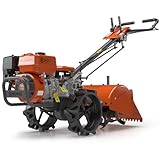
- 1. EARTHQUAKE Victory Rear Tine Tiller — Best overall
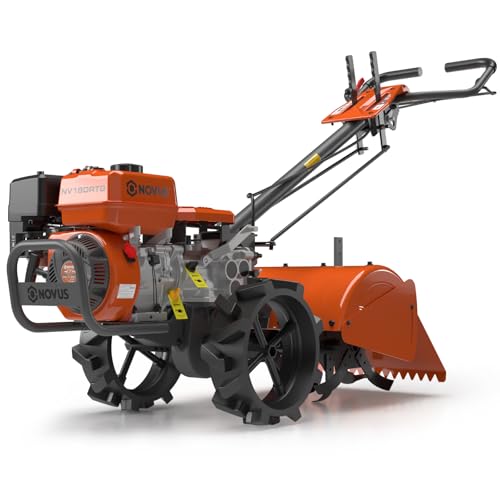
- 2. NOVUS 18-Inch Dual Direction Rear Tine Tiller — Runner-up
- 3. Sun Joe Corded Electric Garden Tiller & Cultivator — Best budget pick
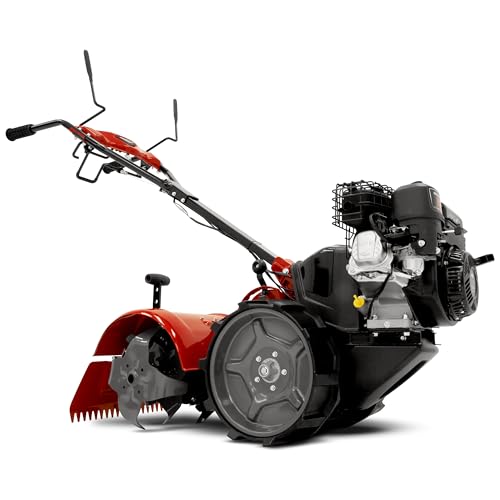
- 4. Earthquake Pioneer Dual Direction Rear Tine Tiller — Best premium
- 5. Pulsar 212cc 20-Inch Gas Powered Rear Tine Tiller — Best for beginners
- Counter-rotating or standard: which tine setup should you buy?
- How much tiller do you actually need?
- What the listings do not tell you
- The verdict
- FAQ
The best electric rear tine tiller in this group is a compromise, because only one machine here runs on a cord: the Sun Joe TJ604E, a 27.1 lb corded cultivator that tills a 16 in row up to 8 in deep. If you actually mean a rear tine machine for serious ground, the Earthquake Victory is the real answer, with counter-rotating tines, a 209cc engine and a 5-year limited warranty.
Who this guide is not for
Skip this roundup if you garden in a couple of raised beds and everything you plant goes into loose, worked soil. A rear tine tiller is a 150-plus-pound machine designed to break new ground, tear through clay, and turn compacted plots into seedbed. That is overkill for a 4 by 8 raised bed, and it is genuinely awkward in a small suburban yard with narrow gates. In that situation the Sun Joe TJ604E, or a smaller front-tine cultivator, does the job with far less fuss.
This guide is also not for anyone who owns a tractor. If you have a compact utility tractor with a three-point hitch, a tow-behind or PTO tiller will out-work every walk-behind here. What follows is aimed at the middle ground: a home gardener with a real plot, hard soil, and no tractor.
A note on the word electric in this category
Here is the honest version. The phrase best electric rear tine tiller is a common search, but it is almost a category that does not exist on the shelf. Rear tine tillers are heavy machines that pull themselves through soil under load, and that load is what argues for a gas engine and a geared transmission. Corded electric models in this size are rare, and battery rear tine tillers with the runtime to work a real garden are rarer still.
Four of the five picks here are gas rear tine tillers. One, the Sun Joe TJ604E, is a corded electric machine, and it is not a true rear tine tiller in the mechanical sense — it is a walk-behind cultivator with steel tines. If the deciding factor for you is truly cordless-free or gas-free operation, the Sun Joe is the only pick in this set that qualifies, and you should read its section with that in mind. If what you actually want is a rear tine tiller for a substantial garden, treat the Earthquake Victory as the default and the Sun Joe as a supplement for lighter work near an outlet.
Best electric rear tine tiller at a glance
| Pick | Tilling width & depth | Engine / motor | Price |
|---|---|---|---|
Best overall EARTHQUAKE Victory Rear Tine Tiller |
16 in wide up to 10 in deep |
209cc 4-cycle Viper gas | Check Price |
| 18 in wide up to 10 in deep (claim) |
212cc 4-cycle gas | Check Price | |
Best budget pick Sun Joe Corded Electric Garden Tiller & Cultivator |
16 in wide up to 8 in deep (claim) |
13.5-amp corded electric | Check Price |
| 17 in wide up to 11 in deep (claim) |
127cc 4-cycle Briggs & Stratton gas | Check Price | |
Best for beginners Pulsar 212cc 20-Inch Gas Rear Tine Tiller |
20 in wide up to 6.5 in deep |
212cc OHV gas | Check Price |



How I screened the field down to five
I started with the tiller category and pulled the rear tine listings that a home gardener would realistically consider, then compared the published specifications side by side. Rear tine machines with no stated tilling width or depth got cut first. So did anything without a listed engine size or motor rating, because that is the single number that predicts whether a tiller will actually pull itself through packed clay.
From what survived, I lined up five criteria: tilling width, tilling depth, engine or motor size, transmission type, and whether the machine offers a reverse or a dual-direction tine mode. Those are the numbers that decide the job. Weight matters too — a lighter tiller is easier on the shoulders through a full afternoon, but too light and it will bounce off hard ground instead of digging.
One machine in the final five, the Sun Joe TJ604E, is a corded electric cultivator rather than a true rear tine tiller. It earns its place because the best electric rear tine tiller question keeps sending readers to this page, and it is the only cord-only option in the set. Its role here is the small-plot alternative, not the winner.
1. EARTHQUAKE Victory Rear Tine Tiller — Best overall
A workhorse 209cc gas rear tine tiller with counter-rotating tines, instant reverse and the only 5-year warranty in the set.
Best for: breaking new ground on a serious home plot Skip it if: you need a plug-in electric machine or a light cultivator
The Victory is the pick because it stacks the numbers a working rear tine tiller needs. Earthquake lists a 16 in tilling width and up to 10 in tilling depth, driven by a 209cc 4-cycle Viper engine and a cast-iron transmission with what the listing calls engineered bronze gears. At 154 lb it has the mass to hold a line through packed soil rather than skate across it, and the 48 x 54 x 23 in footprint is compact enough to turn at the end of a row without a three-point maneuver.
Two features do real work here. The counter-rotating tines spin opposite the wheels, which is what lets a rear tine tiller chew into ground the tines would otherwise ride over. Earthquake calls this out for tough clay, compacted soil, and new ground, and it is the mode you want on a plot that has never been broken. The instant-reverse handle removes the stop-and-shift that eats time along fence lines.
The trade-off is what it is not: it is a gas machine, so the best electric rear tine tiller framing does not apply, and it has no dual-direction tine mode like the Novus and Pioneer offer for maintenance tilling.
Pros:
- 16 in width and up to 10 in depth from a 209cc engine
- Counter-rotating tines built for breaking new ground
- Cast-iron transmission with bronze gears
- Instant reverse without gear shifting
- 5-year limited warranty, the only one published here
Cons:
- Gas only, does not satisfy the electric qualifier
- At 154 lb, awkward to move without the pneumatic wheels engaged
- No standard-rotation mode for lighter maintenance tilling
2. NOVUS 18-Inch Dual Direction Rear Tine Tiller — Runner-up
A dual-direction 212cc rear tine tiller with a full gear transmission and airless tires, sized for medium to large gardens.
Best for: gardeners who want dual-direction tines and airless tires Skip it if: you want a published weight and warranty before you buy
Novus positions the NV18DRTG as a step up in tilling width: 18 in per pass, with the listing claiming up to 10 in of depth, driven by a 212cc 4-cycle gas engine. The distinguishing feature is the dual-direction tine setup, where you can pick counter-rotating mode for breaking ground or standard-rotation for weeding and re-tilling existing beds. Novus says the full gear transmission replaces the belt drive found on cheaper tillers, which if accurate is a real durability advantage over time.
The 16 steel tines and a two-forward, one-reverse gear layout are aimed at control on longer rows. The 37 x 63 x 20 in footprint is narrower and longer than the Victory, which helps in tighter side yards. Airless tires eliminate the flat you will eventually get on a pneumatic-tire machine that sits outside all winter.
Where this pick loses ground against the Victory is transparency. The listing does not publish a weight, and there is no stated warranty in the specifications provided. Both matter on a machine of this size. Treat the 10 in depth and full-gear-transmission language as manufacturer claims rather than measured facts until you see them confirmed in the manual.
Pros:
- 18 in tilling width, wider than the Victory and Pioneer
- Dual-direction tines for breaking and maintenance modes
- Full gear transmission per the listing
- Airless tires, no flats
- Two forward speeds plus reverse
Cons:
- No published weight in the listing
- No stated warranty in the specifications
- Fewer published specs overall than the Earthquake picks
3. Sun Joe Corded Electric Garden Tiller & Cultivator — Best budget pick
The only corded electric machine in the set, and the honest answer for a small plot near an outlet.

Best for: small raised beds and previously worked soil near an outlet Skip it if: you are breaking sod or working more than a short extension cord from power
The TJ604E is not a rear tine tiller in the strict sense — it is a walk-behind cultivator with six rust-proof steel tines, a 13.5-amp corded motor, and a folding handle for storage. Sun Joe lists a 16 in tilling width and up to 8 in of depth as a claim. At 27.1 lb it is by far the lightest pick here, roughly a sixth of the Victory's weight, and the folding handle plus a 52 x 21 x 18 in shipped footprint means it slides into a shed corner instead of eating a garage bay.
What earns the spot is honesty about the search. If you literally want an electric machine — no gas, no oil changes, no pull cord — this is the only pick in the set that qualifies. Sun Joe's own copy describes it as maintenance-free and corded for continuous power, which is fair for what it does. A three-position wheel adjustment lets you set depth for softer or firmer soil.
Understand the limits. It will not break new sod the way the Victory or Pioneer will. It ties you to an extension cord, so your working radius is fixed. And the 8 in depth is a claim on the deepest setting in loose soil, not a guarantee in clay.
Pros:
- Only corded electric pick, no gas or oil
- 27.1 lb, easily lifted with one hand
- Folding handle for compact storage
- Three-position wheel depth adjustment
- The cheapest of the five and easiest to store
Cons:
- Not a true rear tine tiller mechanically
- Tethered to an extension cord
- Will struggle on unbroken sod or heavy clay
- No published warranty in the specs
4. Earthquake Pioneer Dual Direction Rear Tine Tiller — Best premium
A dual-direction rear tine tiller with the deepest listed cut in the set and a Briggs & Stratton engine.
Best for: buyers who want dual-direction tines and a Briggs & Stratton engine Skip it if: you want the deepest cut in the group or the fastest-moving pick
The Pioneer is the most expensive pick here, and it earns the premium slot on two counts. The listing claims up to 11 in of tilling depth, the deepest number in the set, and a 17 in tilling width driven by a 127cc 4-cycle Briggs & Stratton engine paired with what Earthquake calls a patented ultra-efficient transmission. It offers both counter-rotating (CRT) and standard-rotating (SRT) tine modes, so you get the ground-breaking bite of the Victory plus a lighter-touch mode for weeding.
Airless rubber tires with steel rims replace the pneumatic wheels on the Victory, which is a small quality-of-life win: no flats, no seasonal air-up. At 165 lb it is the heaviest pick in the set, and the 40.6 x 62.8 x 21 in body is longer than the Victory in exchange for a slimmer width.
Two honest reservations. The 127cc Briggs is smaller than the Victory's 209cc Viper or the Novus and Pulsar 212cc engines, so peak grunt is lower even if the transmission is efficient. And this listing sells the slowest of the five in the set, so real-world feedback is thinner than it is for the Victory or the Sun Joe.
Pros:
- Deepest listed tilling depth in the group at 11 in
- Dual-direction tine modes, CRT and SRT
- Briggs & Stratton 4-cycle engine
- Airless tires with steel rims, no flats
- Instant reverse handle
Cons:
- Smallest engine of the four gas picks at 127cc
- Heaviest machine here at 165 lb
- The most expensive pick in the set
- Slowest-moving listing of the five
5. Pulsar 212cc 20-Inch Gas Powered Rear Tine Tiller — Best for beginners
The widest tilling row of the set at 20 in, with tractor-style wheels and forward/reverse drive.

Best for: first-time tiller owners who want the widest row Skip it if: you need to till deeper than 6.5 in on the first pass
The Pulsar PTG1120R covers a 20 in row in a single pass — 4 in wider than the Victory and 2 in wider than the Novus. That matters more than it sounds like, because a wider tiller finishes a rectangular plot in noticeably fewer laps and cuts total working time. The 212cc OHV engine drives four 13 in counter-rotating tines, and Pulsar lists the depth as up to 6.5 in, the shallowest of the four gas picks here.
The reason this is the beginner pick is control. Large 13.5 in tractor-style wheels with neutral and drive cotter-pin settings mean you can push it into position with the tines disengaged, then click into drive when you are lined up. A built-in depth regulator keeps each pass at a consistent depth without hand adjustment. The listing also includes 85W140 gear oil pre-filled at 1 qt and 10W-30 engine oil for first start-up, which shortens the setup step for someone who has never owned a tiller.
The trade-off is depth. At 6.5 in the Pulsar will not reach the 10 to 11 in cut the Earthquake pair claim, so if you are turning under a season of root crops or breaking a plot that has never seen a tiller, expect to work in two passes rather than one.
Pros:
- 20 in tilling width, the widest here
- 212cc OHV engine
- Tractor-style 13.5 in wheels with neutral setting
- Built-in depth regulator for consistent passes
- Ships with gear oil and engine oil
Cons:
- 6.5 in listed depth, shallowest of the gas picks
- 154 lb, same as the Victory but with more length
- No dual-direction tine mode
- No published warranty in the specifications
Counter-rotating or standard: which tine setup should you buy?
This is the specification that actually decides a rear tine tiller purchase, and it is the one shoppers overlook because engine size feels more concrete. Here is the plain version.
- Counter-rotating tines (CRT) spin opposite the direction of the wheels. That opposition drives the tines down into hard ground rather than skating across it. This is the mode you want for breaking new plots, working clay, and turning under sod. The Victory is CRT-only. The Pulsar runs counter-rotating tines as well.
- Standard-rotating tines (SRT) spin the same direction as the wheels. They are gentler, faster, and better for maintenance passes on already-worked soil, weeding between rows, or mixing in compost.
- Dual-direction machines give you both modes on one tiller. The Novus and the Earthquake Pioneer are dual-direction: CRT for breaking, SRT for keeping.
If you are buying one tiller for the next decade of a real garden, dual-direction is the more flexible answer. If your plot is already broken and you are maintaining it, standard rotation is fine and the machine will be lighter. If you are starting from a lawn you want to turn into a vegetable garden, counter-rotating is the only tine setup that will do it in one season without a rototiller rental.
How much tiller do you actually need?
The honest sizing guide, using the numbers on these five picks:
- Under 400 sq ft of previously worked soil, near an outlet. The Sun Joe TJ604E does this job, at 27.1 lb and 16 in wide. Anything bigger is wasted money.
- 400 to 2,000 sq ft of established garden, occasional new beds. A mid-size rear tine tiller like the Pulsar with its 20 in width finishes the plot fast and stays manageable to steer.
- Serious plots, hard soil, or breaking new ground. The Earthquake Victory at 209cc with counter-rotating tines and a 10 in depth is the workhorse pick. The Novus 18-inch and the Earthquake Pioneer sit in the same class.
- Anything past a quarter acre of regular vegetable production. A walk-behind still works, but consider whether a tow-behind implement makes more sense.
Match width to plot length. A 16 in tiller in a 40 ft row means 30-ish passes per turnover. A 20 in tiller drops that to 24. On a hot afternoon that difference is real.
What the listings do not tell you
A few things the product pages will not mention, that shape the experience.
- Assembly is not trivial on rear tine machines. Handles, wheels, and depth stakes come detached. Plan for an hour with the manual on your first evening.
- Oil is a first-day job on the gas picks. The Pulsar ships with oil in the box. The others do not always. Check the manual before the first pull.
- Winter storage matters. A gas tiller stored with fuel in the carburetor over a New England winter is a spring service bill. Drain fuel or add stabilizer.
- Tine sharpening is a real maintenance item after a few seasons of rocky soil. Not on the spec sheet, but worth budgeting an hour a year.
- Pneumatic tires vs airless. The Victory uses pneumatic wheels. The Novus and Pioneer use airless. If your tiller lives outdoors, airless is one less annoyance every spring.
The verdict
If your plot is bigger than a raised bed and your soil has ever fought you, the Earthquake Victory rear tine tiller is the right default. It backs a 209cc 4-cycle Viper engine with a cast-iron bronze-gear transmission, cuts a 16 in row up to 10 in deep, and carries the only published 5-year limited warranty in the set. Counter-rotating tines and instant reverse are the two features that separate a rear tine tiller you will still own in a decade from a machine you fight for a season and sell.
The cutoff is plot size and soil condition. If you are working under 400 sq ft of previously turned soil and you have an outdoor outlet close by, the Sun Joe TJ604E at 27.1 lb is the honest answer to the best electric rear tine tiller question — the only cord-only pick here — and it costs less than any gas machine in the group. If you want the deepest listed cut in the roundup at 11 in and both counter-rotating and standard tine modes, step up to the Earthquake Pioneer. If width matters most because your rows are long, the Pulsar's 20 in cut wins that comparison. Every other pick is a variation on those three profiles.
FAQ
Is there a true electric rear tine tiller worth buying?
Is there a true electric rear tine tiller in this set? No — the only corded electric pick here, the Sun Joe TJ604E, is a walk-behind cultivator rather than a mechanical rear tine machine. Rear tine tillers need the sustained torque a gas engine and geared transmission deliver under load. If cord-free operation is non-negotiable, the Sun Joe is your realistic answer for small plots.
Is a rear tine tiller worth it for a home garden?
A rear tine tiller is worth it if you have hard soil, a plot bigger than a couple of raised beds, or plans to break new ground this season. The Victory's counter-rotating tines will turn compacted clay into seedbed in a way a front-tine cultivator cannot. If your soil is loose and worked, a lighter machine like the Sun Joe TJ604E does the same job with less weight.
How deep can these tillers actually go?
How deep can these tillers cut? Published depths in this set range from 6.5 in on the Pulsar to a claimed 11 in on the Earthquake Pioneer, with the Victory rated at 10 in and the Novus at up to 10 in. Those are best-case numbers in workable soil. Rocky ground, dry clay, or shallow topsoil over hardpan will reduce real-world depth on every machine here.
Earthquake Victory or Earthquake Pioneer: which one?
Earthquake Victory or Pioneer comes down to tine mode and depth. The Victory runs counter-rotating tines only, uses a bigger 209cc Viper engine, and carries a 5-year limited warranty at a lower price position. The Pioneer offers dual-direction tines with a smaller 127cc Briggs engine and claims a deeper 11 in cut. Choose the Victory for grunt on new ground, the Pioneer for flexibility on maintained beds.
What is the biggest mistake first-time tiller buyers make?
The biggest mistake first-time tiller buyers make is oversizing for the plot. A 154 lb machine like the Victory or Pulsar is genuinely hard to steer around a small backyard garden, and impossible to lift into a truck bed alone. Match the machine to your plot: cultivator for raised beds, mid-size rear tine for a real vegetable garden, big counter-rotating machine only if you are breaking new ground.
The practical next step is to measure your plot before you buy. Pace the longest row and the widest section, note whether the ground has ever been worked, and pick your soil condition honestly — clay, loam, sand, or somewhere between. Those three numbers point you at the right pick in this list without any spec-sheet gymnastics. For most home gardeners with a real plot and hard soil, the Earthquake Victory does the work a rear tine tiller is actually for: turning ground the shovel cannot, in one pass, without excuses. Match tine mode to soil, get the oil in on day one, and the machine outlasts the garden plan you drew last winter.